How a comment becomes a sale in under a second
The path a viewer's comment takes on a Genpio stream, from the platform's chat feed to the avatar's mouth, and why every hop runs on models we trained.
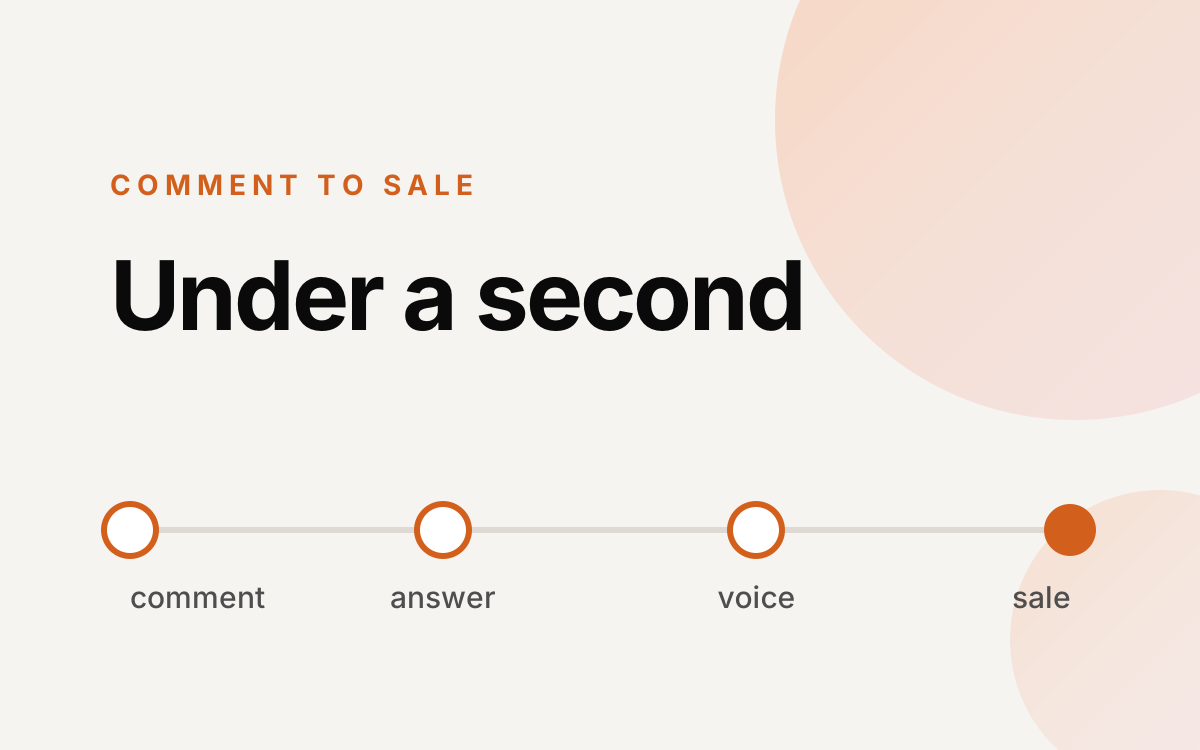
Someone types "does this come in black?" into a live chat. On a human-hosted stream, the answer arrives when the host happens to see the message. On a Genpio stream it arrives in under a second, and it arrives in the language the question was asked in.
Here is what happens in between.
The chat feed arrives first
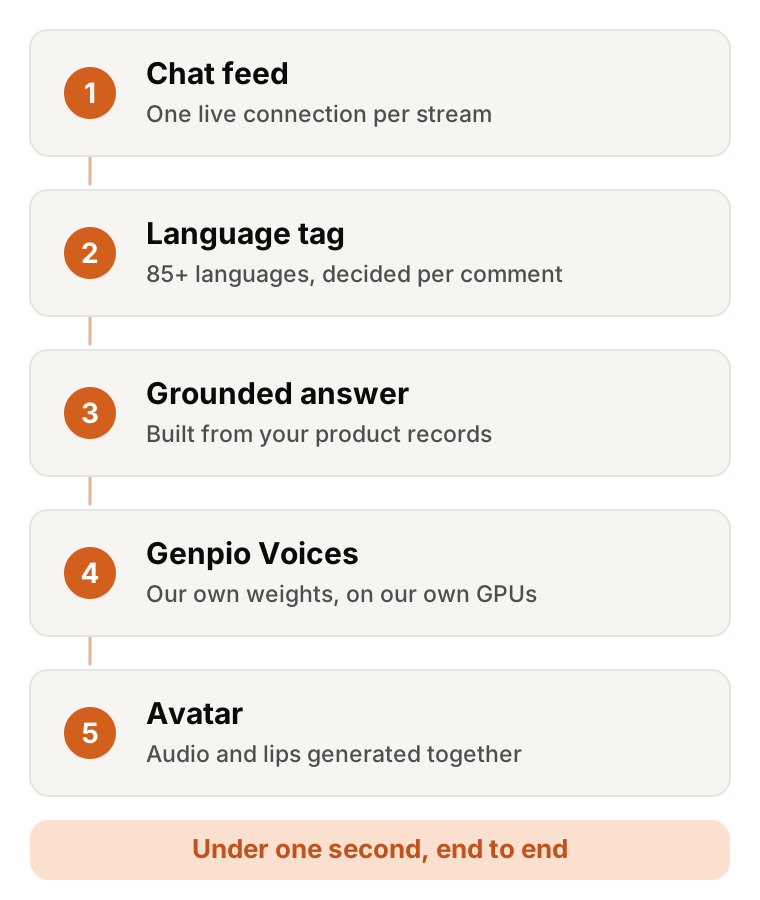
Every platform Genpio streams to publishes its live chat over an API. We hold one connection per active stream and read comments as they land. Nothing is polled, and nothing waits for a batch to fill up, because the whole budget for this is measured in hundreds of milliseconds.
Comments arrive out of order and in a mix of languages. Genpio sells in 85+ languages, so the first thing a comment gets is a language tag, which decides which voice will answer it and in which language the answer will be written.
The answer is grounded in your catalogue, not in a model's memory
The question goes to the agent that runs the stream, along with the products loaded into that stream: names, prices, sizes, stock, shipping, whatever you uploaded. The answer is built from that, which is the only way to keep a live host from inventing a size that does not exist.
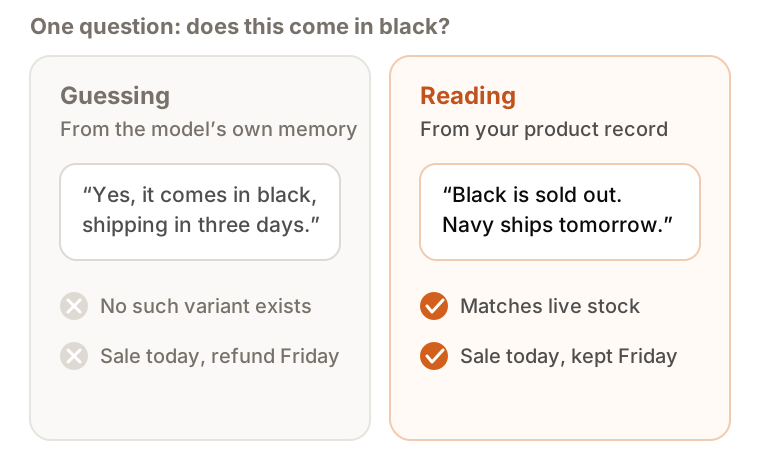
This is the part people underestimate. A model that answers "does this come in black?" from its own general knowledge is guessing about your inventory. A model that answers from a product record you supplied is reading. On a stream where the answer converts into an order in the same minute, the difference between reading and guessing is the difference between a sale and a refund.
The voice is ours
The text answer becomes speech through Genpio Voices, which Genpio trained in-house on the Apache-2.0 OmniVoice architecture over Qwen3-0.6B, from randomly initialised parameters rather than from someone else's checkpoint. Genpio owns the resulting weights outright, with full commercial rights, and serves them on its own GPUs.
The training corpora are public, and we name them: OpenSLR SLR94, SLR37, SLR41-44, SLR63-66, SLR78-80, SLR86, SLR129 and SLR33, plus Google FLEURS. More than 60 languages were trained together in a single run, which is why the model can carry a Vietnamese answer and an English product name in the same sentence without switching accents halfway through.
Running the voice model ourselves is not a point of pride, it is a latency decision. A rented text-to-speech API adds a network round trip and a queue you do not control to every sentence your host says. At one sentence that is invisible. At six hours of continuous streaming across hundreds of concurrent sessions, it is the whole experience.
The avatar's mouth moves in time with it
The audio and the avatar are generated together, not stitched afterwards, so the lips match the phonemes rather than approximating them. The avatar model is also ours, trained in house and served on the same stack, and one model drives hundreds of concurrent streams.
Why the whole chain matters
You can assemble a version of this from three vendors. Plenty of teams have. What you get is a system where nobody owns the latency: the chat reader waits on the language model, which waits on the voice API, which waits on the render service, and each hop has its own rate limit, its own outage page and its own price increase.
Genpio owns every hop, which is why we can quote sub-second replies and 99.9% uptime rather than describing them as best effort.
What this means for your stream
Three practical consequences:
- Questions get answered while the viewer is still watching. A reply that arrives ninety seconds later reaches someone who already closed the tab.
- The answer is in their language. A Thai comment on a stream hosted in English gets a Thai answer, in a Thai voice, without a second stream.
- The cost per stream hour does not move when a vendor changes their pricing. There is no vendor.
If you want to see the timing rather than read about it, the fastest route is a demo: put your own catalogue in, ask your own awkward questions in chat, and watch the clock.